Family Safety Plans via Self Defense Classes condition1combat.com
Families make better decisions under stress when they have simple, trained habits to fall back on. A safety plan is not a binder full of theory, it is a handful of behaviors everyone can perform under pressure, refined through short, regular practice. Self defense classes are a direct path to those habits, especially when the instruction includes realistic scenarios, safe pressure testing, and a framework for preventing trouble in the first place. At Condition 1 Combat Center in New Bern, you can see how practical training threads through the whole program, from beginner self defense classes to structured MMA training, Brazilian Jiu Jitsu, Muay Thai, and boxing. The result is a plan your family can execute, not just discuss.
Why a family plan works better than individual skills
One capable person can solve some problems. A capable team solves more. When family members learn to observe, communicate, and move with purpose, you change the odds. I have watched families who trained together handle a parking lot confrontation with a calm regroup, a quick reposition around the vehicle, and a firm verbal boundary that de-escalated the moment. The same family had a code phrase for emergency departure, knew which adult grabbed which child, and had rehearsed the motion of getting in and locking doors. None of this required heroics. It required shared language and repetition.
In classes that lean into reality, you learn that most preventable incidents unfold in the first 10 seconds. Awareness, distance management, and a practiced first step decide what comes next. Your plan should capture those first steps in a form that sticks: short words, clean tasks, practiced movements.
The backbone of a family safety plan
At its core, a family safety plan should be small enough to memorize, flexible enough to fit a grocery store or a gas station at night, and specific enough that a 9-year-old understands their job.
- A simple communication system with a code phrase, pre-set roles for each person, and clear meet-up points if separated.
- A movement plan: where to go, how to form up, and who protects whom during movement.
- Basic self defense actions that suit each person’s size and abilities, including breaking grips, posting to stand, and protecting the head.
- A de-escalation and boundary script: how to say no, how to get loud, and when to disengage.
- Post-incident steps: calling for help, documenting, checking each other for injuries, and notifying a trusted contact.
Keep it written in a few lines on a card in your wallet or notes app, but make the card a reminder, not a crutch. The plan should live in your body after a few short drills.
Turning classes into a household skill set
Self defense classes at Condition 1 Combat Center do more than teach a single technique. The coaching team ties movement to decision making. I have seen an instructor pause a drill and ask, What is your exit here, left or right? Then have students execute the technique while moving their partner into the path of least resistance. That blend of mechanics and choice is what families need.
The curriculum at a well run program creates layers. Entry level self defense covers situational awareness, posture, boundary setting, releases from common grips, and getting to a safe position. Brazilian Jiu Jitsu gives you grappling control, the skill to stand up under pressure, and enough comfort on the ground to avoid panic. Muay Thai and boxing build striking, footwork, and the ability to create space with structure rather than flailing. MMA training takes those pieces and asks you to connect them while solving realistic problems. At the Condition 1 Combat Center mma gym, those layers appear across classes, which means each family member can plug in at the right level and still speak the same language at home.
A quick story from the mat to the minivan
One evening class focused on hand fighting off a wall. Students learned to frame on the neck and hips, create a step of space, and escape at an angle rather than straight back. A week later, a parent told me she used the same frame and lateral step when a stranger closed distance by the store exit. She set a boundary, used the frame to angle away, and reached her car with her teenager between her and the potential threat. No strikes, no dramatics, just a practiced motion that carried them to safety. That is the link between training and a family plan.
Building the plan, step by step
Start by documenting where your family spends time. Home, school, work, sports, church, playgrounds, road martial arts school spring trips. Walk through the entry and exit points, likely choke points, and available help. Then write the smallest number of rules that cover the most territory. Families often end up with three or four guiding cues.
You do not need a law enforcement background to make this real. You do need to practice like you mean it. Use short sessions at home or in the yard. Practice moving to the car with purpose. Practice using the code phrase in a normal conversation to trigger action. Practice placing a toddler in a car seat under time pressure. Practice calling 911 and stating your location in one breath, then saying your description.
De-escalation first, always
Coaches who have worked security or military details will tell you that a calm, assertive boundary prevents more fights than any choke or punch. At the mma gym Condition 1 Combat Center, boundary setting gets role-play time. You face a partner who pushes social pressure without touching you. Your job: summon volume, hold posture, manage distance, and choose an exit lane. The key is realism without humiliation or harm. When you carry that home, kids learn that a loud, clear voice is not rude, it is a safety tool. Phrases like That is close enough or I do not want to talk become early deterrents.
If a situation still turns physical, de-escalation continues through movement choices. Circling to the strong side of the escorting adult, stepping behind a barrier like a car door or cart, or entering a well-lit business are all de-escalation moves that avoid a fight while reducing risk.
Matching training to age and ability
A family has a range of bodies. The 6-foot parent has tools a 10-year-old does not. Good instruction accounts for that. In Brazilian Jiu Jitsu classes, smaller students learn to post and hip escape, turn to all fours, and stand in base. These moves serve children, smaller adults, and anyone who might find themselves on the ground. In Muay Thai, kids and adults learn teeps and footwork to maintain distance. In boxing, the jab becomes a ruler for space and a signal of intent. Condition 1 Combat Center brazilian jiu jitsu training, Muay Thai, and boxing blend into the self defense classes at Condition 1 Combat Center so each person builds a kit that fits them.
For older adults or those with injuries, modifications are not optional. Training should include getting off the floor using a wall or chair, striking with open hands to protect fragile wrists, and using verbal presence so a fight never starts. I have coached grandparents who became the family’s best communicators under stress because they practiced words and posture even when they skipped the sparring rounds.
The role of grappling in real self defense
The ground is where many untrained altercations drift. Slips, grabs, and chaos pull people down. Grappling skill does not mean you want to be there, it means you know how to get up or hold someone down long enough to leave. The bjj gym Condition 1 Combat Center teaches positional control that helps in a parking lot tussle as much as in a tournament. Side control pressure, a basic mount escape, and the technical stand-up are three skills I consider mandatory for family plans.
When I work with parents, we teach them to shield a child and move with frames instead of wrestling chest to chest. With teens, we emphasize head position, underhooks, and blocking the hips. These are not sport-only ideas. They are ways to stay safe when space gets tight and adrenaline spikes.
Striking for distance and direction
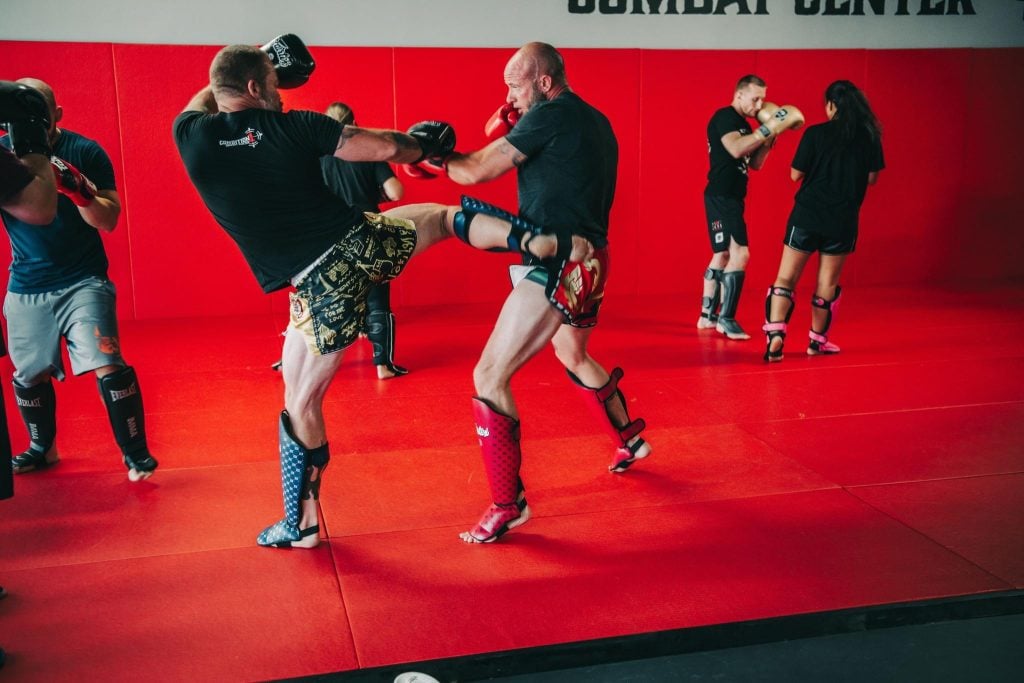
The best strike in self defense is the one that buys you a second to move. In the Condition 1 Combat Center boxing gym and Muay Thai classes, that idea shows up in drills that pair strikes with exits. Jab, step off. Teep, angle. Elbow, clinch, turn. I like to see families learn two or three strikes they can all perform under stress. A jab and a palm strike for adults, a teep and a knee for teens, and a strong forearm frame for smaller kids is a simple template. The goal is not to trade blows. It is to disrupt, create space, and leave.
Legal and ethical boundaries
Self defense is about necessity and reasonableness. You are allowed to defend yourself to the degree required to stop harm, then you must stop. Classes that ignore this do you a disservice. At the mma training Condition 1 Combat Center, coaches discuss proportional response alongside technique. Parents appreciate clear lines like, Defensive strikes stop when you can leave, not when your opponent is punished. Documenting after an incident also matters. Take photos of injuries, write a short account while details are fresh, and call counsel if needed. This is part of the plan, not an afterthought.
The five elements every household should rehearse
- A code phrase that flips the switch from casual to action.
- A rally point inside any store or venue, plus an outdoor meet-up spot if separated.
- A two-step contact protocol: call 911, then text a trusted contact with your location.
- A movement pattern around the family vehicle, including who enters first and who scans.
- A 60-second medical check and kit deployment with a tourniquet and gloves.
Teach the code phrase to even the youngest child, framed as a game that means hold my hand and walk fast. If you change phones or vehicles, run a quick drill that same week.
Home, travel, and the in-between places
Home security starts with layers. Lighting, visible cameras or doorbell video, trimmed hedges, strong door hardware, and a practiced entry routine. The family entry routine reduces fumbles with bags and keys. One person scans, one opens, everyone moves inside together. Drills should include the moment you realize something is off, like a door ajar. Back out, regroup, call for help. Do not clear your own house unless training and necessity demand it.
On the road, simplify. In hotels, choose floors 3 to 6 so you can use stairs in an emergency. Note two exits on every floor. In parking garages, park near exits, back in for fast departure, and keep headlights pointed to potential egress. On foot, pick the better lit side of the street, keep a hand free, and avoid long pauses near blind corners. These are easy habits once they become part of your plan.
Drills that actually stick
Repetition needs to be brief and believable. Fifteen minutes once or twice per week outperforms a two-hour talk every six months. Here is a practical rotation I suggest to families who train at the condition1combat.com mma gym or take self defense classes Condition 1 Combat Center:
- Week 1: Code phrase, form up, and move to the car. One rep per person as the leader.
- Week 2: Boundary setting with volume. Practice three phrases and a fast exit.
- Week 3: Grip breaks and posting to stand. Each person performs two escapes and stands in base.
- Week 4: 911 script and location. Practice saying it loud, then repeat into a phone on airplane mode.
Keep it light, applaud effort, and stop before people lose focus. Tie the drill to something fun, like grabbing ice cream afterward, and the habit will last.
What to expect from training at Condition 1 Combat Center
Condition 1 Combat Center mma training stands out because the staff integrates self defense context into every discipline. In a BJJ fundamentals class, you might work on guard retention, then finish with a discussion on when to disengage rather than sweep. In Muay Thai, you will pair a round of knees with wall fighting escape steps. At the condition1combat.com muay thai gym and boxing gym condition1combat.com, footwork is never just for points. It is for exits.
Families appreciate the schedule flexibility. Adults can attend the MMA or boxing hour while kids are in a youth BJJ class down the mat. Coaches at the Condition 1 Combat Center bjj gym keep parents informed on what the kids are learning so the dinner table conversation can reinforce safety habits. If you prefer private sessions to build a custom family plan, the staff can stage scenarios that match your routine, like getting in and out of a specific minivan or managing a crowded youth sports sideline.
Selecting the right class mix for your goals
If you are new, start with self defense classes at Condition 1 Combat Center, then add a second discipline for depth. Brazilian jiu jitsu training at condition1combat.com builds confidence in clinches and on the ground. Muay Thai creates posture and distance. Boxing polishes hand speed and awareness. MMA ties it all together with controlled pressure that simulates chaos in a supervised setting.
For a family, I often suggest one grappling day and one striking day per week. This rhythm gives you enough diversity to handle grabs and rushes as well as space creation. If you travel often, prioritize drills that work in tight hallways and alongside luggage. If you work late, consider classes that focus on low light or parking lot scenarios when available.
How to vet a gym for family readiness
A facility that supports family safety has a distinct feel. You should see coaching staff that corrects technique without ego, classes that include context for when and why, and a culture that honors defense over bravado. When touring the mma gym condition1combat.com or any facility, ask a few direct questions and watch the responses.
- How do you teach de-escalation and boundary setting?
- What modifications do you use for kids, smaller adults, or older students?
- How often do you run scenario work that includes exits and verbal skills?
- What is your policy on sparring intensity for new or youth students?
- How do you prepare students for legal and medical aftermath?
If answers are practical and grounded, you are in the right place. If the pitch is all about winning fights and none about leaving safely, keep looking.
Edge cases, trade-offs, and what training cannot do
No plan covers everything. Crowds can pin you, bad weather can erase exits, and children can panic. You will make trade-offs. Do you carry more medical gear or keep hands free for kids? Do you intervene for a stranger when your own family stands with you? Training provides frameworks, not guarantees. In classes, we talk about the priority list: protect life, break contact, call for help, document. Each step is flexible. If you must stay to render aid, your plan shifts to scene safety and communication. If a phone is out of reach, a well rehearsed memory of your location beats fumbling with maps.
Self defense classes also cannot replace community. Know your neighbors. Share phone numbers with trusted parents on your child’s team. Walk your street at different times of day and note what changes. The more familiar your environment, the faster your risk assessment.
Medical skills and kits
Violence is rare. Accidents are common. A good family plan includes basic medical capability. Bleeding control and airway positioning save lives. Aim for competence with a tourniquet, pressure dressings, and the recovery position. Keep a kit in the car and a smaller one in a bag. Gloves, gauze, a tourniquet, a chest seal if trained, and a few bandages cover most emergencies you are likely to see. Train with these tools in a class setting. Some gyms, including condition1combat.com, host stop the bleed sessions or partner with local instructors. Ask for it. A coach who cares about the whole picture will point you in the right direction.
Technology that helps without replacing skill
Phones provide maps, flashlights, and instant communication. Use them. Share live location with a spouse during solo errands. Set emergency contacts and medical ID in your phone’s settings. Download offline maps if you travel to rural events. But keep your head up. Technology fails at the worst time. Your plan should work if batteries die and networks lag. That is why short, spoken scripts and physical drills matter.
Practice under mild stress
Controlled stress in the gym inoculates you against the freeze that often follows surprise. At the mma training condition1combat.com, coaches might run a drill where you jog for 30 seconds to raise your heart rate, then perform a grip break and exit while giving a loud boundary line. This blends adrenaline with action. Families can mimic this by doing a few air squats at home, then practicing the 911 script out loud or the technical stand-up on a mat. The point is not fitness, it is familiarity with decision making while your heart thumps.
Keeping the culture healthy at home
The best outcome of family self defense work is not a perfect armbar, it is a shared confidence that you can handle the unexpected together. Keep the tone positive. Avoid scary talk with younger kids. Frame drills as team games. Celebrate small improvements, like a child remembering the rally point or a partner projecting their voice. Rotate leadership so each person gets a turn to call the code phrase or direct the move to the car. When everyone owns a piece of the plan, compliance rises and pressure falls.
Signs your plan is working
Confidence feels different than bravado. It looks like scanning without paranoia, choosing parking spots with forethought, and speaking up early when someone violates your space. It shows up when your teen chooses to step toward staff at a venue rather than retreat into a corner, or when your partner notices a second exit after glancing at a floor plan. Training at the Condition 1 Combat Center muay thai gym or Condition 1 Combat Center boxing gym accelerates this shift because your body learns signals and cues you cannot absorb from a video alone.
Getting started at condition1combat.com
If you are near New Bern, visit condition1combat.com and look at beginner friendly classes across the program. The Condition 1 Combat Center self defense classes are designed to get you moving safely on day one. Add a BJJ or striking class that fits your schedule, then block 15 minutes once a week at home for the family drill. Within a month, you will notice smoother communication and quicker, calmer decisions.
If you are not local, use the same blueprint wherever you train. Look for a facility that treats self defense as the sum of prevention, decision, movement, and aftermath. A place that teaches Brazilian Jiu Jitsu, Muay Thai, and boxing with self defense context, not just sport rules. A place that is happy to discuss a family plan rather than only individual goals.
A final word from the coaching side
After a decade on mats and in scenarios with civilians, first responders, and families, I trust three ideas. Short plans beat long ones. Repetition beats intensity. Communication beats combat. The Condition 1 Combat Center mma gym builds these ideas into the fabric of training. Your family can do the same at home. Put a few words on a card, run a few simple drills, attend classes that prioritize realism and respect. The next time an odd moment unfolds at a store exit or a crowded event, you will not hope it goes well. You will move, together, like you practiced.