How MMA Training Condition 1 Combat Center Builds Real-World Strength
Walk into any well equipped weight room and you will see impressive numbers chalked on a board. Those maxes matter, but the street and the cage ask for something different. Real-world strength is the kind that keeps your posture when a bigger person yanks your neck, that generates force without perfect footing, that endures when your lungs bite. At Condition 1 Combat Center, the training blueprint is built around those demands. Whether you step in for Brazilian jiu jitsu, Muay Thai, boxing, or full MMA, the program layers technique with stress-tested conditioning, produces durability instead of fragility, and teaches you to express strength when it is messy.
This is not a trophy tour. It is a look inside how an MMA gym like Condition 1 Combat Center grows athletes who can handle pressure and impose their game, from the first round to the last scramble. If you follow along, you will see how skill sessions double as strength builders, how strength work stays relevant to fighting, and how the culture keeps people safe while pushing the edge. And if you scan the schedule at condition1combat.com, you can match these ideas to the classes on the mat.
Real-world strength, defined by outcomes
The versions of strength that carry you through a bout rarely look like clean barbell reps. They show up in unglamorous moments: lifting a resisting opponent with double unders against the fence, re-framing when the mount is sliding, throwing a right hand after you have already missed two, or breaking a grip on your heel when your hamstrings are cramping. Technique is the lever, but strength is the fulcrum that lets that lever move under load and fatigue.
You feel this immediately in a class at the Condition 1 Combat Center mma gym. The coaching team ties drills to specific outcomes. It is not just sprawl and shoot for cardio. It is sprawl, clear the head, run the corner, finish on the shoulder line, and then wrestle up if the finish stalls. Every link requires its own expression of strength: a sharp hip hinge on the sprawl, rotational power as you run the corner, and isometric pinch to hold the finish when the partner posts. The strength you gain is never isolated. It stacks.
The three engines behind the program
Skill, conditioning, and resilience run together. Over time, athletes learn how to pace their breathing, when to bank energy with posture, and when to spend aggressively. The programming in the mma training at Condition 1 Combat Center blends the three without blurring the point of each session.
- What we mean by real-world strength:
- Bracing that holds shape under pressure, especially through the spine and hips
- Isometrics that resist, pin, and frame without burning out
- Rotational power that transfers from foot to fist, or hip to choke
- Grip and hand fighting endurance that does not fade in round three
- Decision making that stays clean with a spiked heart rate
You can count reps and sets, but the true measurement is whether you can still execute when the other person is trying to make you fail.
How striking builds strength you can actually use
Muay Thai and boxing are whole-body sports. The casual observer sees hands and shins. The coach sees torque, sequencing, and tension that switches on and off at the right times. In a typical Muay Thai class at the Condition 1 Combat Center muay thai gym, round structure alone nudges strength forward. Three minute pad rounds with a 1 minute rest, especially with call-outs like sprawl into kick or catch and dump, tax bracing and hip drive more than most gym circuits.
A few practical examples from a pad session:
-
Heavy low kick sets are paired with checks and returns. The check demands a one-legged isometric hold through the hip pocket, which builds the stabilizers you need for takedown defense. The return kick trains storing and releasing elastic energy through the core and hip flexors.
-
Clinch entries from a long guard frame teach forearm and shoulder isometrics. A fighter learns to maintain posture, walk their partner, and pummel for inside position while breathing shallow and steady. That posture under load is worth more than a handful of shrugs.
-
Boxing rounds with built-in slips and rolls, finished with a 10 second burst of non-stop hooks to the body, train rotational power and anti-rotation in one go. The hooks produce force, the slips and rolls teach you to keep a tight cylinder while fatigue tries to open you up.
Pads and bags are adjustable tools. Coaches at an mma gym like Condition 1 Combat Center manipulate the variables to target different strength qualities. For instance, a 40 second on, 20 second off interval across six rounds emphasizes power endurance, while longer three minute rounds cultivate patience, posture, and crisp technique under duress. Sparring days simply test whether the strength shows up when someone hits you back.
Grappling: where isometrics meet intelligence
Brazilian jiu jitsu is marketed as leverage over power, and that is fair, but the lever still needs a base. In the bjj gym at Condition 1 Combat Center, positional work gets the first call. Mount escapes are not about hurling someone off, they are about well placed frames, hip direction, and timed bumps. That said, maintaining a frame against a heavy partner for 30 seconds is an isometric feat through the chest, lats, and obliques. Get-ups from half guard demand a hip switch coordinated with a stiff post. Your adductors, glutes, and trunk learn to hold shape during an awkward rise.
In drilling blocks, you will see three to five minute rounds of positional sparring, often with constraints. Start in side control with a tight cross face, bottom player works to insert a knee shield and recover guard, top player hunts head-and-arm pressure. The starting pressure is high, so the bottom player must find strength in good angles rather than panic. The top player learns to ride with bodyweight instead of arm strength, a lesson that spares the shoulders over a long season.
Grip endurance builds naturally. A no-gi round where you fight for a single wrist and inside tie for two minutes will torch the forearms and lats more efficiently than most grippers. Gi classes sometimes program two minute sleeve-and-collar sequences, then switch immediately to live rounds, which exposes the difference between static and dynamic grip strength. The staff does not teach death grips. They teach dynamic holds that reattach as soon as they slip, which saves hands and keeps attacks flowing.
Wrestling and the clinch: the hinge between striking and the mat
If you want a crash course in real strength, wrestle a slippery opponent against the wall near the end of the session. You will find out if your hips stay under you, if you can keep a lock without burning your biceps, and if your neck folds under a hard whizzer. The mma gym Condition 1 Combat Center treats this phase as a separate skill set because it is where many fights are won or lost.
Wall wrestling rounds often run for 60 to 90 seconds with rapid partner swaps. That time frame forces sharp efforts without sloppy fatigue. A typical sequence: pummel to double unders, step to an inside trip as your head presses in, and if the trip stalls, switch to a high crotch with a tight shelf. Your legs and trunk do the heavy lifting, not your hands. Drilling with clear stops prevents bad habits like yanking with the lower back. Coaches cue details like head position under the chin, elbow pinch instead of biceps pull, and small foot replacements to keep your stance under you.
Clinching for Muay Thai has its own flavor, but the overlap is huge. Hand positioning for control, neck strength for posture, and hip balance during off-balancing are universal. A three minute clinch exchange that alternates between inside control, lock-breaks, and short knees will humble even strong lifters. It develops straining power without compromising breath, a trait that matters in both self defense and competition.
Strength and conditioning that respects the fight
Condition 1 Combat Center mma training slots strength and conditioning in the week where it supports skill rather than competes with it. You might see two focused strength sessions for most members, with shorter micro doses in warm-ups or finishers on skill days. Fighters in camp deserve more structure, of course, but the general template avoids volume that wrecks your timing.
A weekly rhythm might look like this:
- Two strength sessions that prioritize hinge and squat variations, horizontal and vertical pulling, anti-rotation core work, and neck training
- One energy systems session that touches repeated sprint ability or high power intervals
- Short primers or finishers attached to skill classes, like a five minute grip circuit after gi drilling or a sled push sprint before pad rounds
- One mobility and tissue quality block, either as a dedicated class or a guided 20 minute segment after live rounds
- A technical sparring window where intensity is managed but sequences are chained under pressure
The movements you see are simple. Deadlift patterns with trap bars or kettlebells. Step-ups instead of maximal back squats to save the spine. Landmine presses and single arm rows to load rotation safely. Carries that challenge posture and breathing. For the core, coaches like long lever planks, Pallof presses, and slow tempo rotations. Add neck nods, flexion, and controlled bridges as you adapt. The get more info goal is always to take stress off the joints you already abuse and load tissues that need more love.
Rep schemes and density vary with the season. In an eight week build-up, you might start with sets of 5 to 6 on the big patterns, move to 3 to 4 for power emphasis, then land at clusters with 10 to 20 seconds between reps for a final sharp phase. Accessories live in the 8 to 12 range. Rest periods breathe enough to keep quality high. Nothing in this plan is flashy, and it should not be.
Energy systems without guesswork
Fighting does not reward only one gear. You need aerobic capacity to clear fatigue, an engine for repeated high output bursts, and the ability to manage pace with intent. At the mma gym Condition 1 Combat Center, conditioning blocks typically match the demands of striking or grappling emphasis for that day.
On striking heavy days, expect intervals that echo pad and bag rounds. For example: five rounds of three minutes at 80 to 85 percent of your max effort on a bag or assault bike, with a one minute rest. Rate of perceived exertion beats lab numbers for most of us, but when heart rate monitors are used, you might see targets like 150 to 165 bpm during work and 120 to 130 in the rest minute. The session finishes with short sprints, such as 8 to 10 seconds at max, 52 to 50 seconds easy, repeated for 6 to 10 minutes.
Grappling heavy days favor tempo circuits and positional carries. You will see sets like farmer carry for 40 meters, heavy rope pulls for 30 seconds, then immediate turtle to stand-ups for 30 seconds, rest one minute, repeat four times. These teach you to produce and then survive, a key reality of scrambles. Sparring blocks at the end of class are the real test, and you quickly notice who can return to a calm baseline within 30 seconds by how sharp their first grip is in the next round.
Safety is not softness
New athletes often worry that a fight gym will break them. A well run mma training program does the opposite. It protects the joints that have to be there for the long haul and plows training stress into tissues that thrive under it. The staff at Condition 1 Combat Center uses several quiet guardrails: contact levels that scale with experience, situational sparring that reduces head shots while teaching tactics, and consistent warm-up sequences that grease the patterns you need before volume arrives.
The warm-ups look like they were built by coaches who have wrestled and boxed enough to know where people get hurt. Neck prep and shoulder blade control show up daily. Hips get both rotation and flexion without forcing splits. Ankles are loaded in range, then asked to stabilize during light bounces or marches. You can tell a lot about a gym from how it warms you up. If you feel ready, not tired, they did it right.

Recovery is built into the culture. Nobody gets a medal for rolling hard while hurt. If you need to swap live rounds for drilling, coaches help you find value, often with grip fighting sequences or technical pad work. That is how you keep athletes, not just athletes, but families and professionals with day jobs, on the mats for years.
Coaching detail that wins the small battles
The mark of a skilled corner is not volume, it is timing and clarity. The same is true in a class. Watch how a boxing coach corrects a jab at the Condition 1 Combat Center boxing gym. They will not say punch faster with vague hype. They will cue you to let your lead heel kiss the floor and to retract the hand on a straight line, then have you repeat sets of two jabs with a half step in, half step out. One small change, clear feedback, and then reps.

In jiu jitsu, you will hear cues that put pictures in your head. Stack the opponent’s knees to their nose before you pass. Paint the mat with your shoulder for the cross face. When coaches use language like this, athletes solve problems rapidly because the brain anchors the cue to an image, not just a rule.
Sparring is not a test you pass or fail. It is data. Good coaches set constraints, like only body shots in boxing for the first two rounds or starting every jiu jitsu roll in a leg entanglement with a clear tap policy, so people work a slice of the game at usable speed. Those constraints let you push output without exploding risk.
Self defense without theatrics
People walk in for different reasons. Some want the cage, some want confidence, some simply want to get fit and learn a little about how to keep themselves safe. The Condition 1 Combat Center self defense classes lean on fundamentals that transfer across contexts: posture that doesn’t crumble, footwork that moves you to angles, and a handful of reliable get-ups and clinch entries.
Scenarios are honest. Break grips and run when you can. If you cannot, create frames, establish head position, and exit on a line rather than backing up blindly. A sharp palm strike and a knee from cinched control are teachable in days and manageable under stress. This is not movie choreography. It is principles put through drills with voice pressure, light contact, and an emphasis on de-escalation when possible.
How beginners and veterans share the room
It is common to see a brand new member working near a fighter in camp. The trick is in the scaling. A new student learning Thai kicks might do sets of five on each side with focus on balance, while the veteran does sets of ten with a sprawl and re-kick. In jiu jitsu, beginners might start guard retention with an instructor feeding only one type of pass. Advanced players face mixed pressure. The plan looks the same from a distance, but the loading and complexity change.
Condition 1 Combat Center bjj gym sessions often pair a white belt with a more experienced partner on positional rounds, which reduces chaos and raises learning speed. In boxing, partner pad work lets someone with less experience work their combinations while receiving realistic, scaled returns. Nobody benefits from chaos for its own sake. Structure creates safety, and safety lets people work hard without flinching.
Metrics that track what matters
Chasing numbers for their own sake can distract from the fight. Still, a few simple metrics help. Coaches at an mma gym like condition1combat.com might use these to keep progress honest:
- Rounds sustained without technical decay, such as throwing a clean jab cross with guard return for all three minutes
- Positional holds, for example maintaining a strong over under clinch with head position for 30 seconds against resistance
- Get-up proficiency from bad spots, like escaping side control to knees in under 10 seconds
- Grip endurance noted by successful sleeve breaks or wrist control re-attaches per round
- Recovery rate measured by how quickly speech and nose breathing return between rounds
These metrics are not about winning the room. They are about shrinking leaks and making sure what you drill shows up when it counts.
Program examples that carry over
Skill time provides the meat, but a few accessory patterns consistently punch above their weight for fighters. A short list worth keeping in rotation:
- Suitcase carry for 20 to 40 meters per hand, building lateral core stability that translates to takedown defense and hard body shots
- Copenhagen plank holds to protect groins and improve adductor strength for guard work and knee shields
- Landmine rotational press, light to moderate load for brisk sets of 4 to 6 per side, marrying hip pop to a punch path without joint grind
- Belt squat marches for 60 to 90 seconds to load legs and lungs without compressing the spine, perfect before clinch rounds
- Low box step downs with slow negatives to bulletproof knees for pivots, level changes, and sprawls
These accessories are easy to teach, simple to progress, and have a direct line to the demands of combat sports.
The culture that keeps people progressing
Real-world strength is not built in isolation. You need partners who bring energy without ego, classes that start on time, and clear expectations for contact and conduct. The atmosphere at mma training condition1combat.com reads like a professional room: shoes off on the mats, hands wrapped before class starts, mouthguards in for sparring, and a quick word with partners about pace before the round. Small rituals create respect, and respect makes hard training sustainable.
You will notice the absence of drama. Coaching decisions follow principles. New students do not get thrown into hard rounds. Fighters in camp have a schedule and partners who help them sharpen the right tools on the right days. Recreational members get as fit as they have ever been, add real skills, and stay healthy enough to show up again on Monday.
What to expect in your first month
The first session at an mma gym can feel like learning a new language. The staff at Condition 1 Combat Center eases you into grammar. In your first week of Brazilian jiu jitsu, expect warm-ups that teach hip movement, shrimping, and technical stand-ups. Drills anchor a couple of guard passes and escapes. Live rounds are short and coached. You leave tired, not wrecked, with two techniques you can describe clearly.
In Muay Thai, you will start with stance, footwork, and a measured introduction to kicks so your shins and hips adapt. Boxing classes introduce line of attack, jab mechanics, and basic defense. You will hit bags and pads more than you will spar. If self defense is your goal, the early focus is boundary setting, framing, and exits, with a couple of simple strikes that do not require athleticism to land.
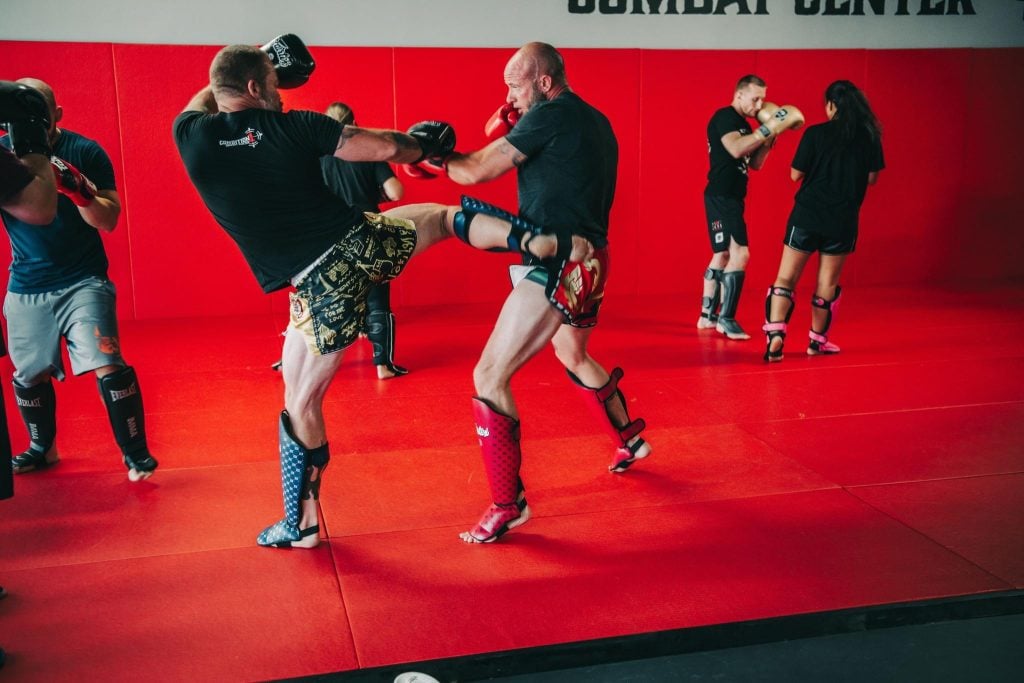
By the end of the first month, your feet will live under you, your core will brace automatically when you strike or pummel, and your breathing will sound steadier. That is the strength that matters.
A note on longevity
The athletes who improve the most over a year are not the ones who destroy every session. They are the ones who show up four days a week, sleep enough, eat like adults, and listen when the coach says to flow. Consider this a sustainable pace: two striking sessions, two grappling sessions, one to two strength or conditioning blocks that either precede a skill day or sit on a day of their own. If you carry stress from work or family, say so. Good coaches shift the dials.
Pain speaks up along the way. That is part of training. The difference between noise and signal matters. Good soreness fades in a day or two. Joint pain or anything that changes your mechanics needs a conversation. A quick modification, like swapping roadwork for bike intervals or replacing hard sprawls with step-backs for a week, can keep your arc smooth.
Why this style of training serves everyone
Not every member plans to fight. That does not lessen the value. Real strength is the ability to keep shape, make decisions, and apply force when conditions are not ideal. That helps a parent carry a sleeping child without a back twinge, a nurse handle a long shift without shoulder strain, or a student hold focus through exams. When a gym designs sessions that evolve your structure and capacity rather than smash you into the ground, you reap benefits that show up far from the mats.
Condition 1 Combat Center mma training simply chooses tools that line up with the realities of combat sports. You learn to punch with your feet and hips, not just your arms. You learn to breathe inside a clinch. You learn to stand up when someone is trying to keep you down. You train your neck to hold when a whizzer cranks, and your hands to fight for inside position without burning out. These are the shapes and efforts that transfer.
Search for mma gym condition1combat.com or walk into the lobby and ask to watch a class. The details matter and you will feel them at floor level: clear rounds, precise coaching, partners who work and smile, and a focus on performance that stays friendly to beginners. That is how you build real-world strength, the kind that withstands time and pressure.